Building Africa’s First Insulin Factory to Boost Health Sovereignty
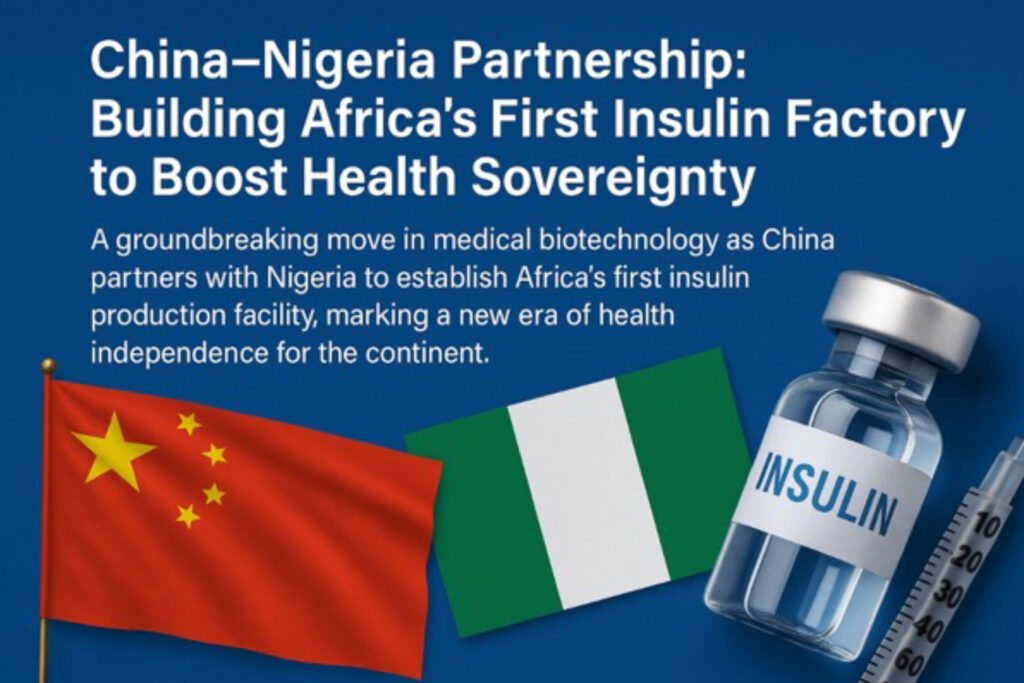
China’s growing engagement in Africa is evolving beyond infrastructure and trade; it is now entering the realm of transformative healthcare solutions. In a significant announcement on October 1st, Chinese Ambassador to Nigeria Yu Dunhai revealed plans to establish Africa’s first insulin factory in Nigeria. The date, which marks both China’s National Day and Nigeria’s Independence Day, highlights the strength of the partnership between the two nations.
The initiative aims to eliminate Nigeria’s reliance on imported insulin and position the country as a regional hub for medical biotechnology in Africa. “Chinese companies are currently negotiating with Nigeria to build the first local insulin factory to end the country’s dependence on imports and make it a center for medical biotechnology in Africa,” explained Ambassador Yu.
This move comes at a critical time for Africa’s healthcare landscape. According to the World Health Organization (WHO), the number of adults living with diabetes in Africa has nearly doubled, increasing from 30 million in 2010 to 54 million in 2022. However, only 46% of those living with diabetes are aware of their condition, underscoring a growing public health crisis.
The upcoming insulin factory is expected to serve Nigeria’s domestic needs and also supply neighboring countries, thereby improving access to life-saving medications across the continent. China’s health investments in Africa have expanded significantly in recent years, encompassing modern hospitals and specialized medical centers in nations such as Comoros, Cape Verde, and Djibouti. These initiatives are part of the broader framework of the Forum on China–Africa Cooperation (FOCAC), which reflects a shift towards long-term, capacity-building partnerships.
At the ceremony, Senator Babangida Hussaini, representing the Vice President of Nigeria’s Upper House, praised the collaboration as a “strategic partnership” that spans multiple sectors, including infrastructure, energy, agriculture, education, defense, trade, and investment.
This development signals a new chapter in Africa–China relations, one that emphasizes health equity, sustainable development, and local capacity building. Unlike traditional short-term aid models, China’s comprehensive approach aims to empower African nations through industrial and technological collaboration, ensuring they play a significant role in their own development.
#BioFrontAfrica #Biotechnology #HealthInnovation #ChinaAfricaPartnership