
Superbug Slayer: How AI is Engineering the Next Generation of Antibiotics
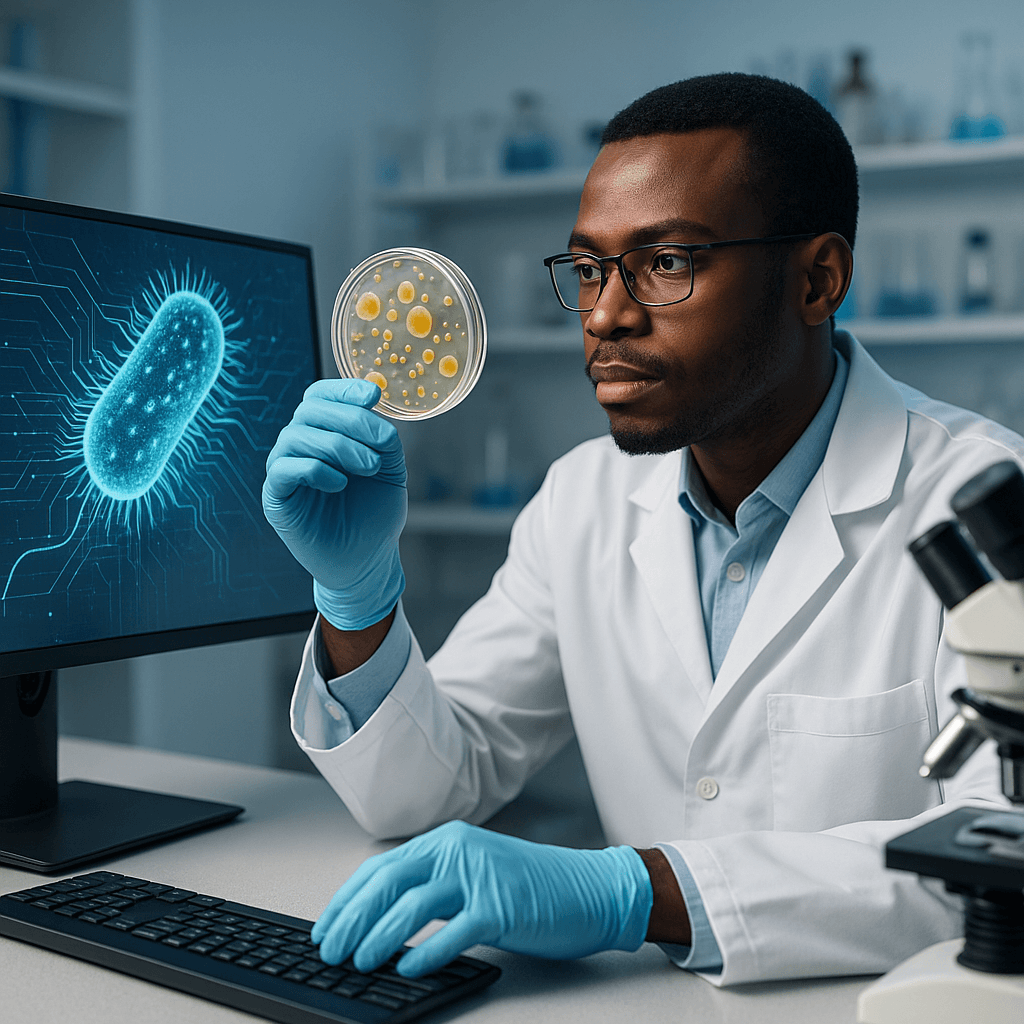
Antimicrobial resistance (AMR) has become one of the greatest health challenges of our time, putting significant pressure on global healthcare systems—especially in Africa, where infections caused by resistant bacteria are rapidly increasing. In response, artificial intelligence is emerging as a powerful tool in the quest for new antibiotics, offering speed, precision, and insights that far surpass traditional laboratory methods.
MinoHealth AI Labs has taken a bold step forward by developing the Moremi Bio Agent, an advanced AI-driven platform designed to discover new broad-spectrum antibiotics that specifically target the Enterobacteriaceae family—a group of bacteria that includes E. coli and Klebsiella, both known for causing severe, drug-resistant infections. This system integrates large language models (LLMs), bioinformatics, and molecular chemistry modeling to identify new antibiotic candidates capable of overcoming bacterial resistance.
Unlike conventional drug discovery processes that can take years of trial and error, the Moremi Bio Agent, autonomously designs and evaluates molecules predicted to inhibit bacterial growth. It leverages extensive molecular databases and knowledge graphs to simulate how compounds will interact with bacterial targets, greatly reducing research time and costs. Early reports suggest that the platform has already generated a promising pipeline of novel antibiotic structures, setting the stage for laboratory validation and preclinical testing (Getrude et al 2025).
The implications for Africa are significant. The continent faces a disproportionately high burden of drug-resistant infections, yet it has limited local capacity for antibiotic discovery. A platform like the Moremi Bio Agent , could provide a strategic advantage, enabling African scientists and biotech firms to develop new drugs tailored to local health challenges. By harnessing AI, researchers can accelerate discovery timelines, reduce reliance on imported antibiotics, and strengthen regional health security.
However, the path to clinical application remains complex. Computational successes must be followed by rigorous experimental validation, toxicity studies, and regulatory approvals before any new antibiotic can reach patients. Ethical and safety considerations surrounding AI-powered biodesign, including potential dual-use risks, also require strict oversight and transparency. Scaling such platforms in Africa will necessitate significant investments in data infrastructure, laboratory capacity, and collaborations among AI startups, academic institutions, and national health agencies.
Despite these challenges, the emergence of AI-driven antibiotic discovery represents a new frontier in the global fight against AMR. It demonstrates that Africa’s growing biotech sector is ready to compete on the global stage, using homegrown innovation to address pressing health issues both continentally and globally. The Moremi Bio Agent, signifies not just a technological milestone, but also a declaration that African ingenuity—powered by artificial intelligence—can lead the next chapter in medical discovery.
Read the full article from MinoHealth AI Labs