The Role of Women in Africa’s Biotech Future
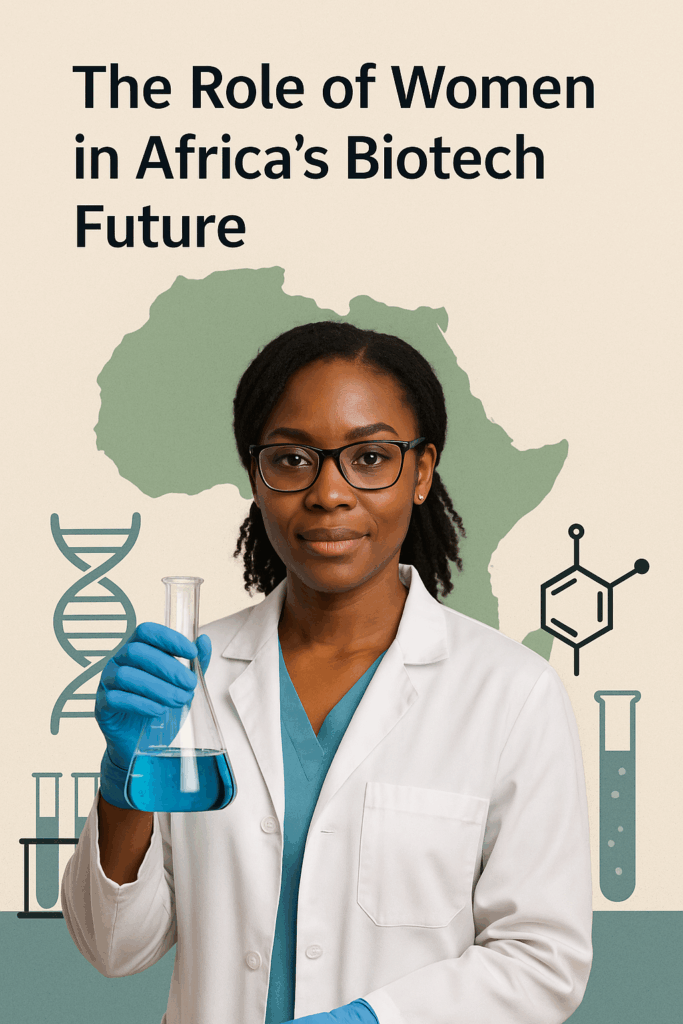
Africa is entering a transformative era in biotechnology, driven by scientific innovation, digital advancement, and a generation of researchers dedicated to addressing the continent’s most urgent health, agricultural, and environmental challenges. At the heart of this momentum are African women, whose leadership and scientific excellence are shaping a powerful and inclusive biotech future. From vaccine research and disease surveillance to genomics, drug discovery, agribiotech, and nanomedicine, African women are expanding the scientific frontier and redefining what is possible.
Breaking Barriers and Building Africa’s Scientific Capacity
Historically, African women in science have faced structural barriers such as funding inequalities, limited mentorship opportunities, and underrepresentation in leadership roles. However, women are now driving some of the most significant advancements in African biotechnology. Below are globally recognized African women scientists and their contributions:
1. Dr. Quarraisha Abdool Karim (South Africa)
Dr. Abdool Karim is a world-leading HIV researcher and the Associate Scientific Director of CAPRISA. She co-led the groundbreaking CAPRISA 004 trial, demonstrating that tenofovir gel can reduce HIV infections in women—a milestone in HIV prevention. Her work has transformed global HIV strategies, especially for adolescent girls and young women in Africa.
2. Dr. Faith Osier (Kenya)
Dr. Osier is an internationally celebrated immunologist studying how humans acquire natural immunity to malaria. Her research is fundamental in guiding the development of next-generation malaria vaccines. She has led major immunology research groups in Kenya and Europe and is recognized as one of Africa’s strongest scientific voices in global vaccine research.
3. Prof. Tebello Nyokong (Lesotho/South Africa)
A distinguished chemist at Rhodes University, Prof. Nyokong is renowned for her work on nanomaterials used in photodynamic cancer therapy. Her breakthroughs have enhanced Africa’s visibility in global nanotechnology and laid the foundations for innovative therapeutic platforms inspired by African scientific excellence.
4. Dr. Catherine Nakalembe (Uganda)
As a NASA Harvest scientist and the 2020 Africa Food Prize Laureate, Dr. Nakalembe employs satellites, AI, and machine learning to monitor crops, support climate resilience, and improve agricultural policies. Her work directly strengthens Africa’s capacity to ensure food security in an era of climate uncertainty—an essential aspect of agribiotechnology.
5. Dr. Rose Leke (Cameroon)
Prof. Leke is a leading malaria researcher whose work has influenced malaria control strategies across Africa. Her contributions to immunology, maternal health, and infectious disease policy have shaped global health frameworks and inspired generations of scientists across the continent.
6. Prof. Elsie Effah Kaufmann (Ghana)
Prof. Elsie Effah Kaufmann is one of Ghana’s most influential scientific leaders and a pioneer in African biotechnology and STEM education. As the founding Head of the Department of Biomedical Engineering at the University of Ghana, she played a key role in establishing the country’s biomedical engineering curriculum. Her efforts have significantly enhanced Ghana’s capacity for medical device innovation, biological systems engineering, and applied biotechnology.
Driving Health Innovation Across Africa
Women scientists are central to advancements in areas such as :
- Vaccine research
- Malaria and HIV immunology
- Antimicrobial resistance surveillance
- Genetic and genomic research
- Affordable diagnostics
- Pandemic preparedness
- Maternal and child health
Their leadership strengthens Africa’s biomedical independence and enhances its global scientific influence.
Women Entrepreneurs Powering Biotech Startups
In addition to academic leadership, African women are founding and leading biotechnology startups, driving innovation in:
- Diagnostics and medical devices
- Bioinformatics and AI-driven health solutions
- Agribiotech and climate-smart agriculture
- Biomanufacturing and reagent production
These women are not just advancing science; they are building industries, creating jobs, and reinforcing Africa’s capacity for local innovation.
Mentorship, Policy Leadership, and Science Advocacy
African women scientists also play critical roles in:
- Mentoring young girls entering STEM fields
- Shaping national biosafety and research policies
- Building capacity in genomics and molecular biology
- Leading scientific academies and advisory boards
- Expanding ethical, sustainable biotech ecosystems
Their influence is broadening the pathways through which African innovation reaches communities, biotech companies, and global scientific platforms.
Challenges That Still Remain
Despite these advancements, challenges persist:
- Underrepresentation in leadership roles
- Limited access to funding and research infrastructure
- Gender bias in hiring and promotions
- Reduced visibility in global research collaborations
Addressing these gaps requires systemic support across academia, industry, and government.
The Future: Powered by Women, Built for Africa
African women are shaping a powerful new biotech era—one defined by local innovation, global impact, and solutions grounded in Africa’s unique health and development needs.