
Rwanda Launches $14 Million Biotech Centre to Enhance Staple Crop Innovation
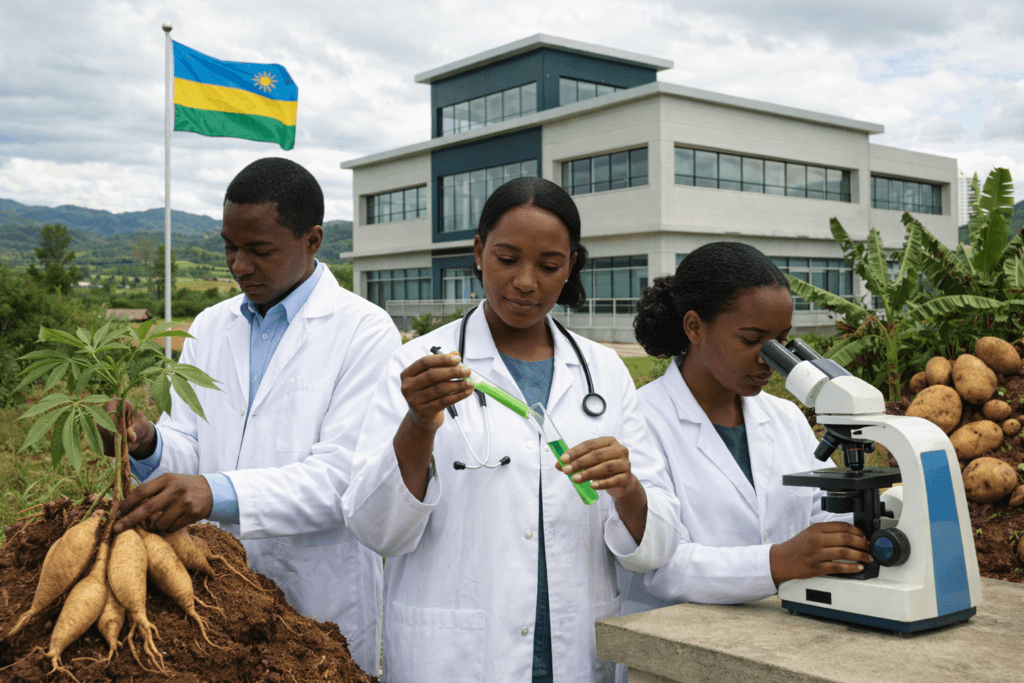
Rwanda has taken a significant step to strengthen its agricultural research capacity with the launch of a $14 million biotechnology centre focused on staple crops. This initiative aims to improve food security and build local scientific expertise.
Launched on December 15 by the Ministry of Agriculture and Animal Resources, this initiative is part of the newly unveiled Rwanda Biotech Capacity Building (BioCap) project. The five-year program is designed to empower Rwandan scientists to develop improved crop varieties using advanced biotechnology tools.
Centre of Excellence for Crop Biotechnology
At the core of the BioCap project is the establishment of a Centre of Excellence for Crop Biotechnology at the Rwanda Agriculture and Animal Resources Development Board (RAB) site in Rubona. Funded by the Bill & Melinda Gates Foundation, this centre will serve as a hub for cutting-edge research and training in genetic transformation, genome editing, molecular diagnostics, and biosafety.
Agricultural officials state that this facility will play a crucial role in enhancing the national capacity to develop crop varieties resilient to pests, diseases, and environmental stresses—challenges that significantly affect yields for millions of smallholder farmers across the country.
Focusing on Key Staple Crops
The BioCap project will initially target three strategic staple crops: cassava, potato, and banana. These crops are vital to Rwanda’s food systems and rural economies. For example, late blight disease can destroy entire potato harvests, while viral diseases can severely impact cassava yields, threatening both food supply and farmer livelihoods.
By equipping Rwandan researchers with the necessary tools and expertise, the project aims to enhance crop productivity and reduce reliance on imported agricultural inputs.
Strengthening Research and Regulatory Frameworks
In addition to breeding improved crops, the initiative will enhance Rwanda’s capacity to generate robust regulatory, environmental, and food safety data, which are essential for the responsible evaluation and deployment of biotechnology products. This includes the integration of new varieties into performance trials, seed systems, and extension services for farmers.
Rwanda has also established a supportive policy environment for biotechnology. In July 2023, the government approved legislation to govern the use, processing, marketing, importation, and export of genetically modified organisms (GMOs). However, no GMO crops are yet cultivated on a large scale in the country.
A Strategic Move for Food Security and Scientific Leadership
Government officials view biotechnology as a strategic tool to enhance agricultural productivity and resilience, aligning with broader goals to bolster food security and economic growth. By building national research capacity and fostering innovation, Rwanda aims to establish itself as a regional leader in crop biotechnology, providing science-based solutions to agricultural challenges.
The BioCap project represents an important milestone in Rwanda’s agricultural transformation, underscoring the role of modern science in promoting sustainable and equitable food systems.
Read the full article from ecofinagency