
Africa’s Health Revolution Will Be Powered by AI
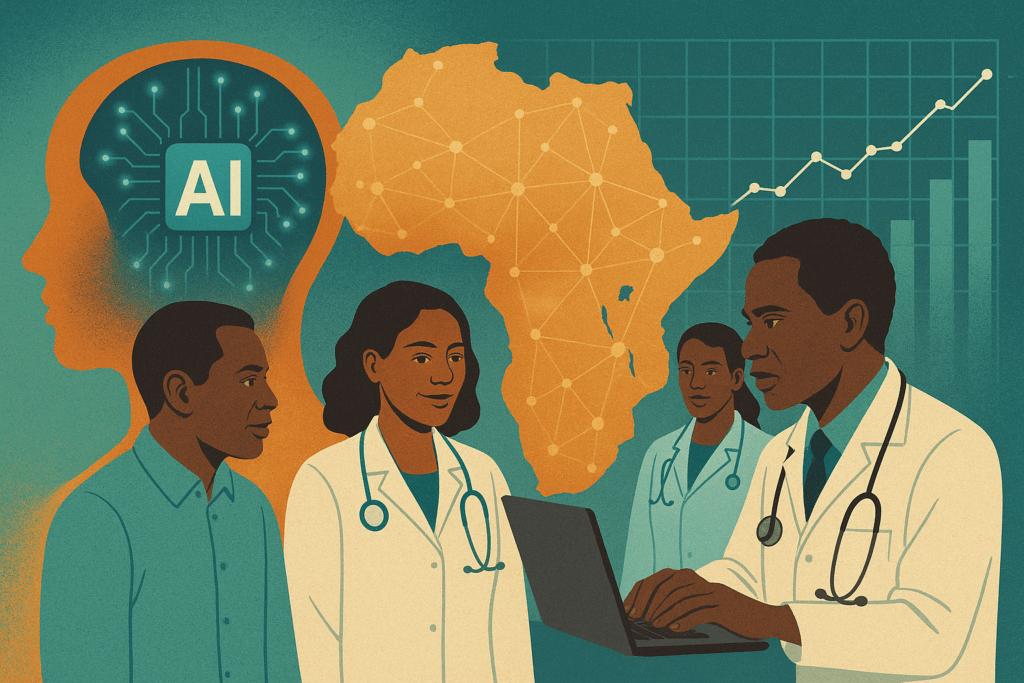
Artificial intelligence (AI) has the potential to transform public health across Africa by facilitating more effective disease surveillance, outbreak prediction, and tailored health interventions, provided that these tools are developed with African contexts in mind.
In a recent commentary for Nature Africa, data scientist Alex Mirugwe highlights how context-specific AI can address long-standing gaps in the continent’s health systems. AI is particularly valuable in analyzing large datasets, uncovering patterns, and supporting rapid decision-making, especially in areas where health resources are limited and disease burdens are high.
AI for Early Warning and Outbreak Response
One of the most promising applications of AI in public health is the development of early disease warning systems. AI models can integrate various data types, such as epidemiological reports, climate patterns, and mobility trends, to anticipate outbreaks before they escalate. This proactive approach allows health agencies to act quickly, potentially saving countless lives.
In addition to warning systems, AI tools can forecast epidemic trajectories, optimize resource allocation, and improve emergency responses. For example, machine learning algorithms may predict where outbreaks of malaria, HIV, or tuberculosis are likely to occur next, enabling health ministries to preposition medical supplies and personnel more efficiently.
Localized Models for Local Problems
However, Mirugwe stresses that the benefits of AI depend on its local relevance. Many existing AI systems are trained on data that reflects the populations, languages, and disease patterns of high-income countries. This misalignment can render these systems less effective or even misleading when applied in African contexts.
To fully unlock AI’s potential, tools must be trained on African data, designed with local expertise, and deployed in collaboration with regional institutions. This approach not only enhances accuracy but also fosters local ownership of technological solutions.
Beyond Technology: Capacity and Data Infrastructure
Investing in AI for health also necessitates parallel growth in data infrastructure and digital literacy. Health ministries, research institutions, and community health networks require secure, interoperable data systems and training so that AI insights can be meaningfully translated into actionable measures on the ground.
Building this ecosystem will require sustained commitment from governments, universities, and industry partners alike. The potential payoff could be significant: quicker detection of emerging health threats, smarter resource deployment, and more resilient health systems.
Read the full article from Nature Africa