Building Africa’s Next Generation of Vaccine Scientists
For decades, Africa has relied heavily on imported vaccines to combat its deadliest diseases, producing only 0.2% of the world’s vaccines despite being home to over 15% of the global population. However, this imbalance is beginning to change.
The African Vaccine Academy (AVA), launched in December 2023 by Nigeria-based Bloom Public Health in partnership with European institutions, is training a new generation of African scientists to drive vaccine innovation, manufacturing, and regulation across the continent.
“It is a foundational pillar for Africa’s future in global health,” says Olutoun Sanusi-Oladunni, a pharmacist specializing in global vaccine access and health security, who leads the initiative. “It is more than just an educational program.”
Training Africa’s Vaccine Workforce
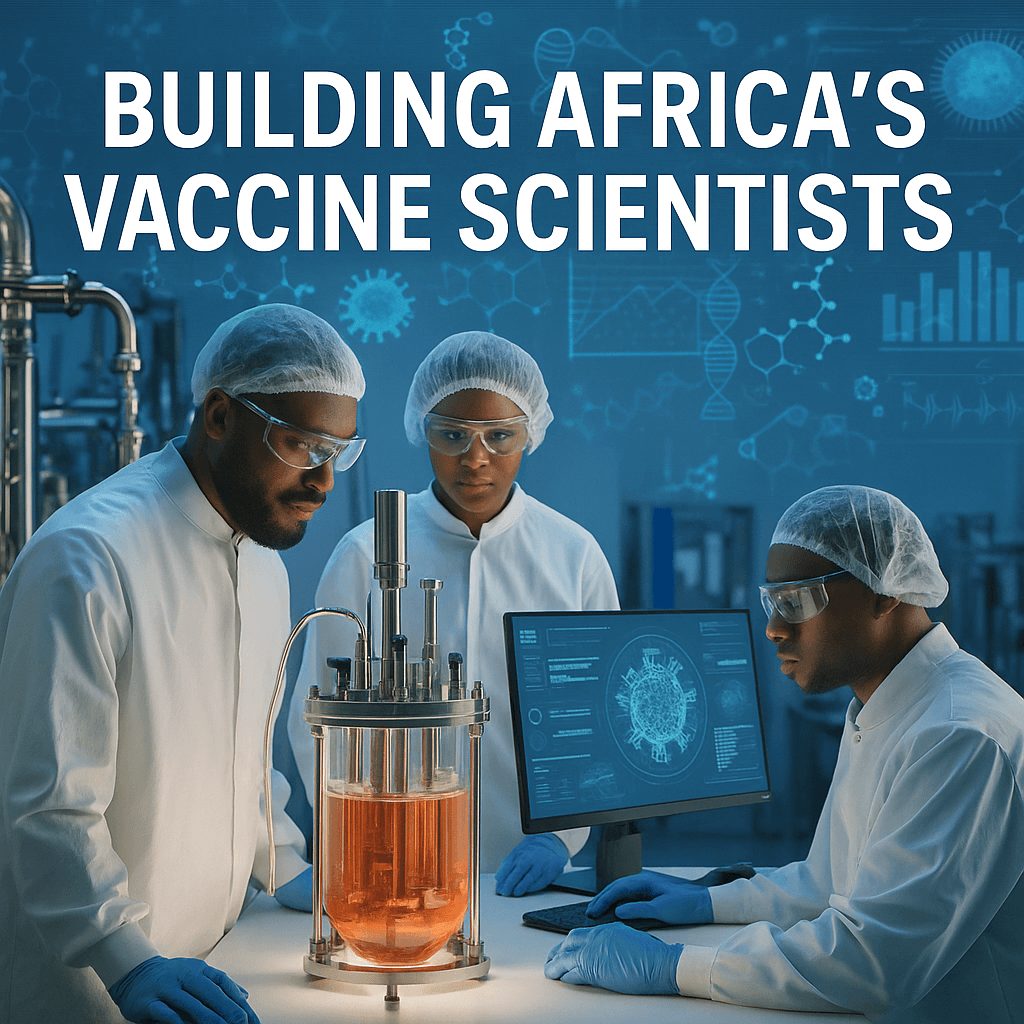
The AVA combines virtual learning, simulation training, and case-based learning to equip participants with practical experience in vaccine production. The program focuses on mRNA technology, known for its speed, adaptability, and potential in pandemic response. The training is supported by the Biotech Training Facility (BTF) in the Netherlands, along with academic and industry collaborators across Africa and Europe.
“Africa has amazing talent, but practical experience in vaccine production is limited,” says Cynthia de Leeuw, Senior Commercial Director at BTF. “Our role is to transfer that knowledge and build capacity so African scientists can strengthen their vaccine ecosystems.”
Impact and Collaboration
In 2024 alone, more than 40 scholars, including pharmacists, biomedical researchers, veterinarians, and STEM graduates, completed two training cohorts. Participants collaborated on research projects, regulatory case studies, and conference presentations addressing vaccine manufacturing challenges.
Egyptian participant Ashraf Ahmed, Compliance Head at BioGeneric Pharma, found the courses extremely relevant to his daily work: “Modules on quality assurance, chain controls, and documentation mirrored what I do in my role. I was able to apply the lessons immediately.”
For Nigerian participant Franklyn Oluwadare, the program provided a deeper understanding of regulatory standards and cross-continental teamwork: “Working with peers from across Africa demonstrated how collective expertise can solve real-world challenges.”
Building Capacity and Overcoming Barriers
The AVA also hosts regular webinars on manufacturing, data integrity, and production strategies, attracting hundreds of attendees from academia, government, and industry. However, challenges remain: limited funding, infrastructure gaps, and restricted access to advanced technologies continue to hinder Africa’s vaccine independence.
“Building a vaccine manufacturing facility requires significant funding and international compliance,” Ahmed notes. “Developing local capacity is essential to prevent delays like those experienced during COVID-19.”
The Road Ahead
Looking ahead, the AVA aims to establish a state-of-the-art training facility in Africa, reducing the need for overseas laboratory training.
“We are exploring the best-suited country for the facility, but we cannot wait,” says Sanusi-Oladunni.
By investing in people, technology, and collaboration, initiatives like AVA are helping Africa transform from a vaccine importer into a vaccine innovator, shaping a future where Africa can develop and deliver its own life-saving solutions.
Read the full article from Nature Africa