
The Largest African Prostate Cancer Genomics Study Ever Conducted Changes Everything We Thought We Knew
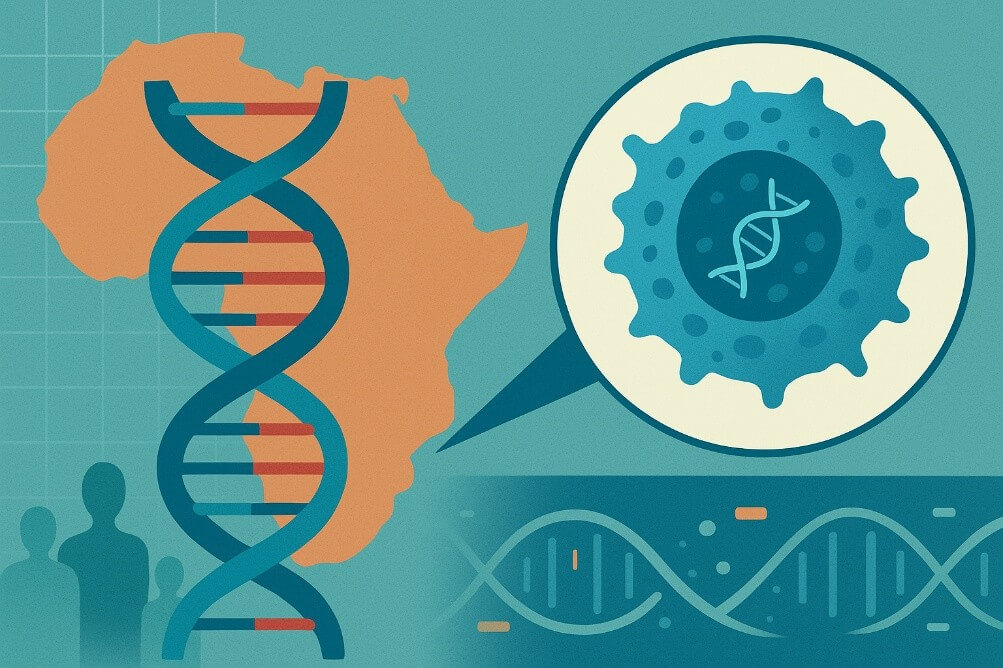
For years, prostate cancer has taken a disproportionate toll on men of African descent, who face the highest incidence and mortality rates globally. Yet the genetic factors driving this burden have remained largely uncharted, in part because African populations have been historically underrepresented in genomic research.
A new multi-country genomics initiative is beginning to change that narrative.
Led by collaborating scientists across Ghana, Nigeria, Senegal, South Africa, and Uganda, the study brings together genomic data from nearly 8,000 men, consisting of 3,963 prostate cancer cases and 3,509 controls, forming one of the most comprehensive African prostate cancer datasets to date.
“This scale of African representation is unprecedented,” says one of the project’s genomic epidemiologists. “It’s allowing us to uncover risk factors that were invisible in studies dominated by European ancestry populations.”
Mapping Africa’s Genetic Landscape of Prostate Cancer
By fine-mapping key genomic regions, the team identified 15 independent association signals linked to prostate cancer risk, including four previously unknown variants not detected in non-African groups. Many of these signals emerged from well-known cancer-associated loci such as 8q24.21, 6q22.1, and 11q13.3.
Some of the most striking discoveries were private African alleles—variants unique to African populations. These variants form haplotypes associated with more than double the risk of prostate cancer for carriers.
“These alleles likely arose after the out-of-Africa bottleneck,” explains a population geneticist on the team. “They carry important biological information that we simply can’t learn from datasets outside Africa.”
Insights Across a Diverse Continent
The research also underscores the rich genetic diversity of Africa. Risk patterns differed significantly across regions—not because variants were more or less common, but because their effects varied by population.
“This study shows us that there is no single ‘African’ genetic profile,” one investigator notes. “The risk architecture differs across West, East, and Southern Africa, so our approaches to screening and prevention must reflect that diversity.”
Through evolutionary modeling, the researchers found that many of the risk alleles appear to be shaped by neutral evolution, rather than strong positive selection—offering a clearer picture of how these variants may have persisted across populations.
Applications for Precision Medicine in Africa
These findings carry wide-reaching implications for clinical care and public health.
For risk prediction, the results highlight a critical gap: screening tools built from European-ancestry samples often fail African men, who may carry unique high-risk haplotypes.
The discoveries open new opportunities for:
- Ancestry-informed risk models that better predict prostate cancer risk in African men
- Tailored screening strategies, including earlier screening for genetically high-risk groups
- Therapeutic development guided by African-specific genomic pathways
“This is the type of data that can directly influence how clinicians stratify risk and manage early disease,” says a clinical oncologist affiliated with the project.
Building Africa’s Genomics Capacity
Beyond the scientific insights, the study highlights an urgent need for stronger African-led genomics infrastructure. Expanding biobanks, sequencing centers, and data analysis hubs across the continent remains essential for accelerating discoveries.
However, challenges persist: limited funding, uneven access to advanced sequencing technologies, and shortages of trained personnel restrict the pace of progress in many regions.
“We need long-term investment in African genomic ecosystems,” says one researcher. “Without it, the continent cannot fully harness these breakthroughs.”
The Road Ahead
Looking forward, the team emphasizes the importance of recruiting even more diverse African populations to broaden the scope of discovery. Functional follow-up studies will also be essential to understand how newly discovered variants influence prostate cancer biology.
“This is just the beginning,” one investigator reflects. “By prioritizing inclusion and African-centered research, we’re moving toward a future where prostate cancer care is informed by Africa’s own genomic data.”
As Africa strengthens its research capacity and builds collaborations across the continent and the diaspora, initiatives like this are helping rewrite the story of cancer genomics—shifting Africa from an underrepresented region to a global leader in understanding and addressing prostate cancer risk.
Source: Nature Genetics